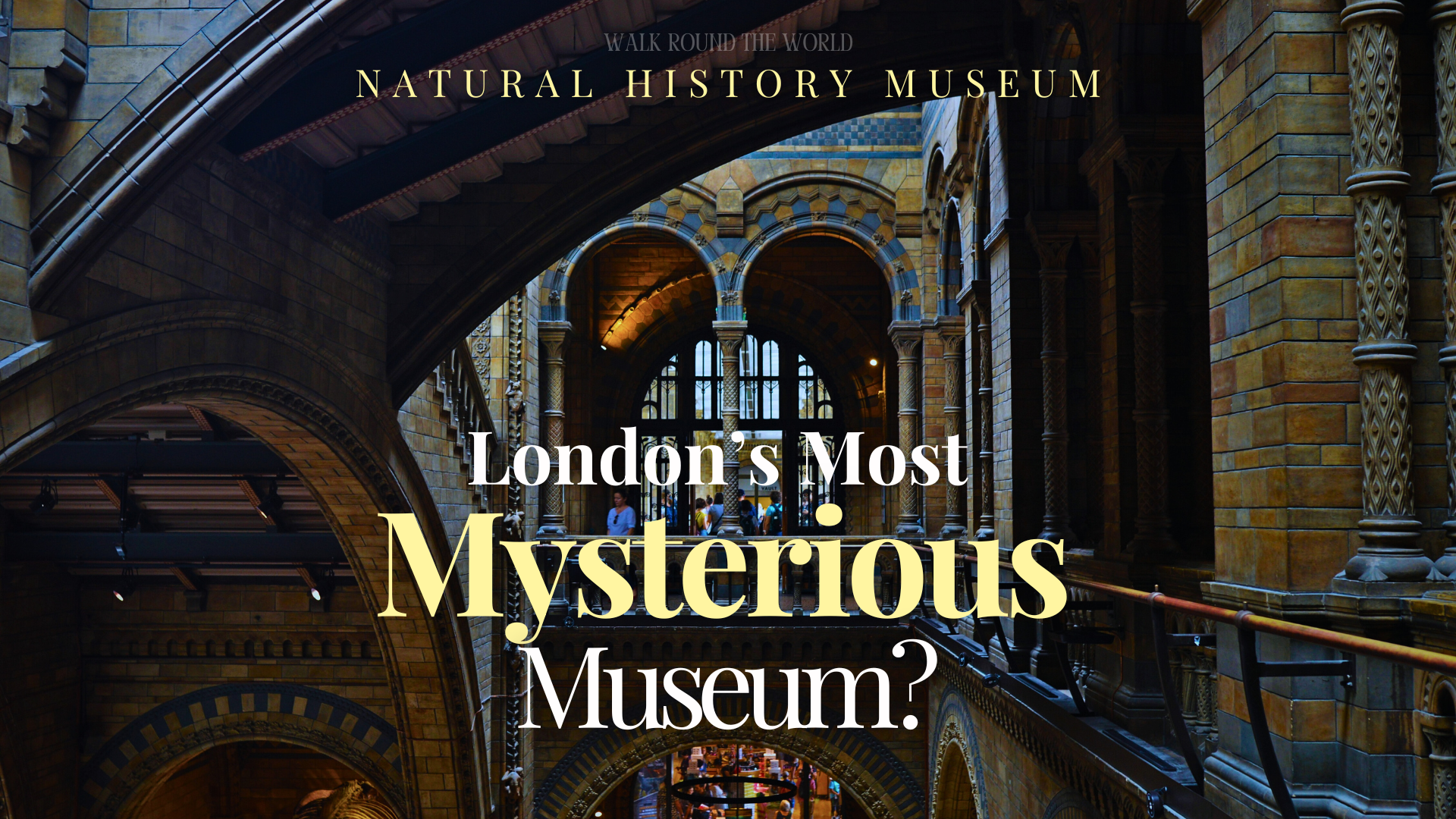
If you ever get the chance, would you spend a night at the Natural History Museum?
Well, I wouldn’t. And trust me… it’s not because of the dinosaurs.
Most of London’s museums close their grand doors by early evening. But, I think the Natural History Museum London does it out of necessity… maybe, to keep the whispers from turning into headlines.
You might ask… what whispers?
Oh, just the usual… security guards refusing to walk certain corridors alone, mannequins that allegedly blink back, taxidermy models that move on their own …and the lingering scent of pipe smoke when there’s not a soul around. You know. Tuesday stuff.
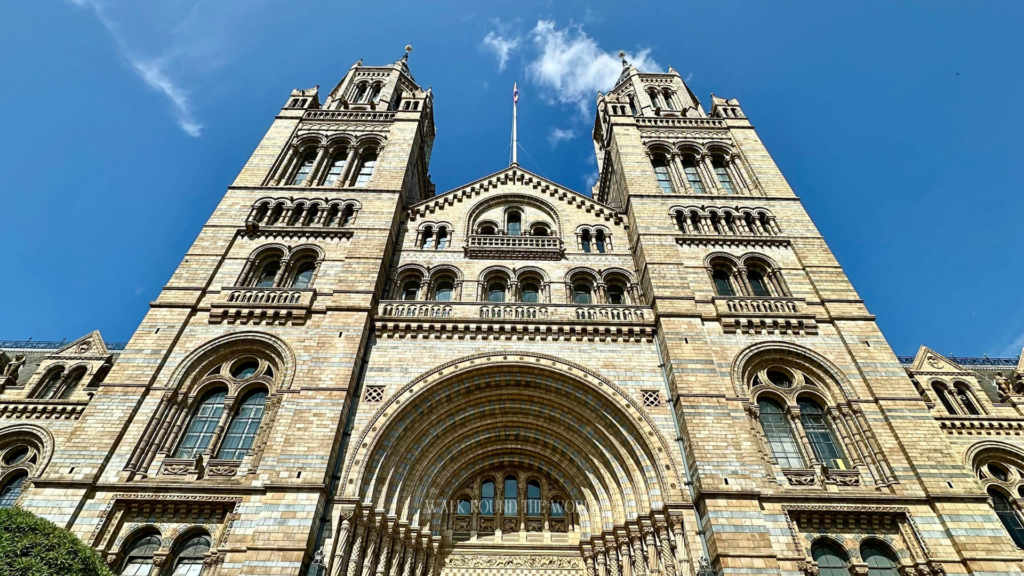
By day, it’s a family-friendly haven of science and wonder. But, after the sun goes down… it’s believed that the specimens claim this museum as their own. And there are 80 million such specimens. The Natural History Museum at night feels like an entirely different world.
You can understand where I am going… right?
Well… let’s just say that taxidermy isn’t the only thing that stares back. Maybe our beloved Paddington Bear of London was afraid of something else that night when he was kidnapped… did he sense something far more mysterious within those museum walls?
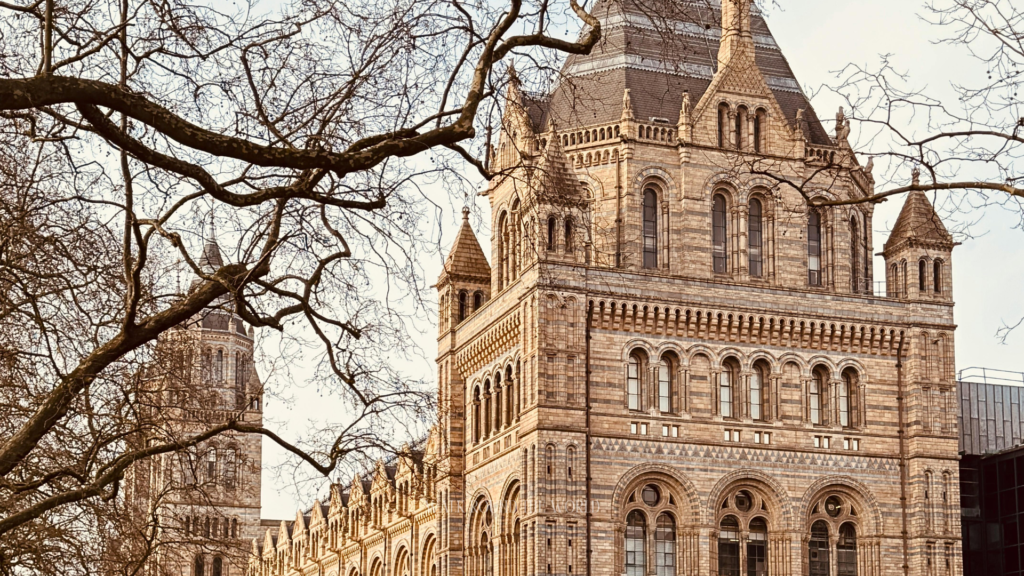
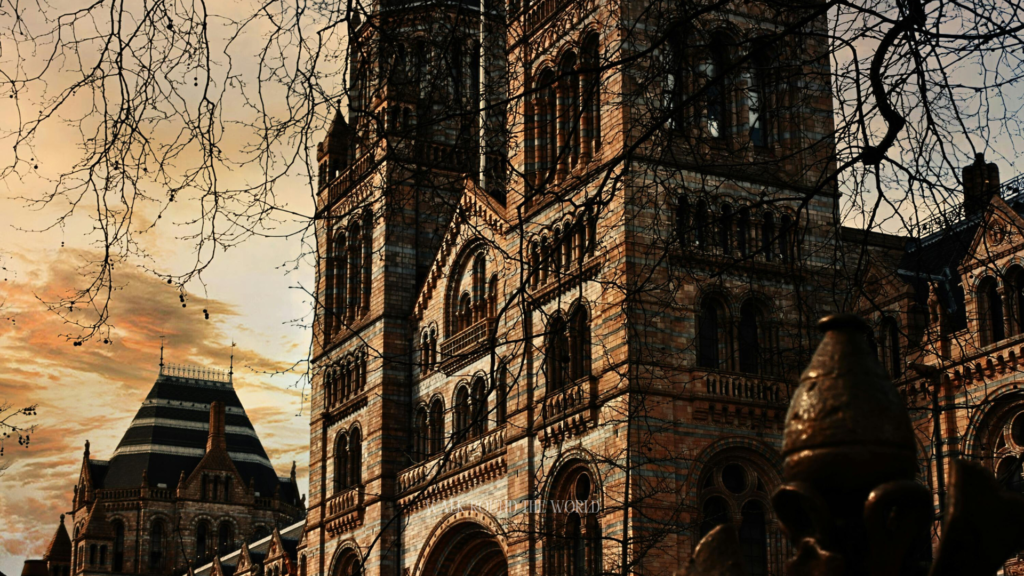
After all, behind the elegant Romanesque arches and fossil-lined halls lie stories that never made it to the museum guidebooks. Neither do they mention them on the museum map.
Now, don’t think of this blog as a ghost tour…rather, consider it as a part II of “Natural History Museum London- Where World Hides Its Oldest Secrets”
There are no demons. No Victorian banshees. No “possessed porcelain dolls.” I believe what lingers in this museum is subtler. Stranger. More curious.
And after this blog, no traveler can skip the Natural History Museum. Yes, it’s that interesting.
So, come on.
Haunting in the Natural History Museum
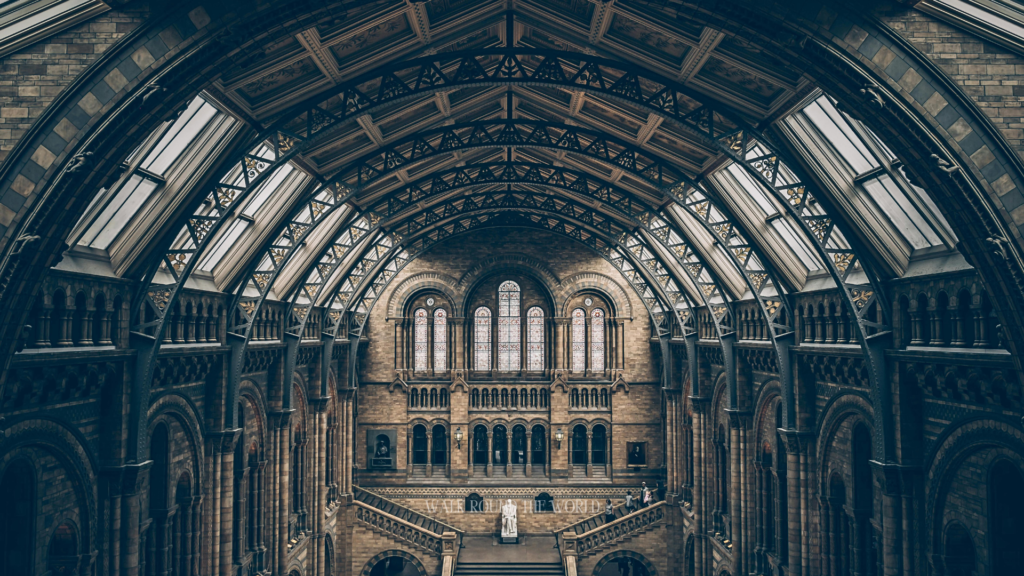
Well, I believe there are some things to know before visiting Natural History Museum London. It’s more like you need some answers.
Let’s start with the million-dollar question… “Is the Natural History Museum London really haunted?“
Well, officially, it isn’t. But it depends on what you call “haunted” after you’ve heard the stories from those who swear it is.
Maybe that’s why the decades of rumours and Natural History Museum ghost stories have never stopped circulating.
Now, let’s talk about some of the popular ones.
Sir Owen’s Rounds
You know, once a night guard joked with a nervous laugh…“If the temperature drops suddenly, it’s Sir Owen doing his rounds”.
He meant Sir Richard Owen, the Victorian-era founder of the museum. Brilliant, yes. But also highly protective of his collections.
His office once stood where the modern museum administration block now sits.
And, sometimes, in the grand hall, some unusual things people report experiencing. Such as footsteps hurriedly pacing in empty corridors, a sudden smell of old pipe tobacco, and some even claim to see a shadowy man in a frock coat walking near locked exhibit rooms.
Whether exaggerated or not, these accounts have become some of the most talked-about Natural History Museum ghost stories in London.
Seems like Sir Owen never quite handed over the keys.
So, next time you enter, be on your best behavior around the specimens. Because that’s all he cares about.
The Weeping Baby
Now, let me share with you an incident…
One night, a museum worker reportedly found one of the baby chimpanzee models on the floor… several meters from its original case. No alarms. No broken glass…there was absolutely no explanation.
It happened in the Mammals Gallery.
Over the years, several museum security guards have reported hearing faint crying from this room, and when they’ve gone to investigate, but they found nothing at all…except the air was suddenly freezing cold.
This crying generally happens near the display of mother animals with their young, especially in the taxidermy mammal rooms.
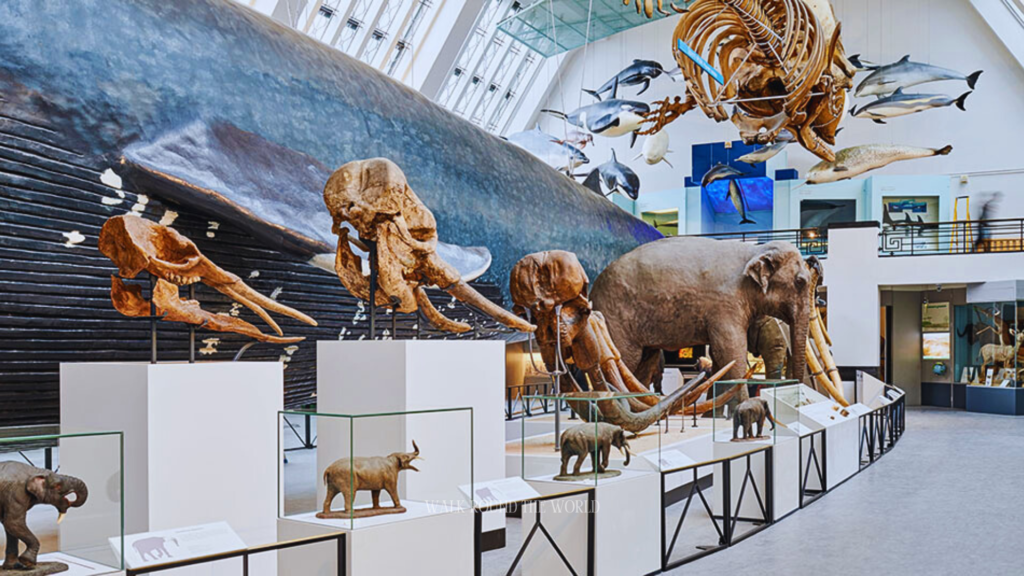
Image credit: Natural History Museum, London (nhm.ac.uk)
Are you afraid? I bet not.
So, let’s move on to the next one.
The Crocodile Whispers
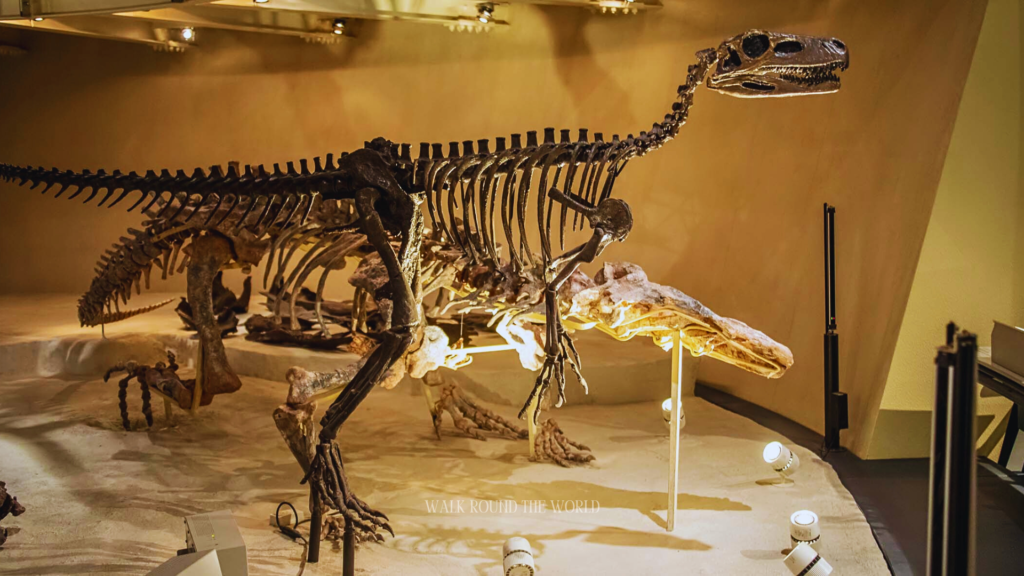
This time, it was a paleobotanist. He quit mid-research, saying, “Something in that hallway spoke to me, and it wasn’t living.”
Now, where was he? He was in the Paleontology department, near the fossilized skulls, particularly near the crocodilian skulls and prehistoric predator fossils.
And, later…some workers even reported hearing those whispers too when walking alone. But only if they stop walking.
So, you know what not to do.
Jars That Shift
Yes, in that infamous Natural History Museum Spirit Collection, there are Victorian jars that some claim mysteriously “move”.
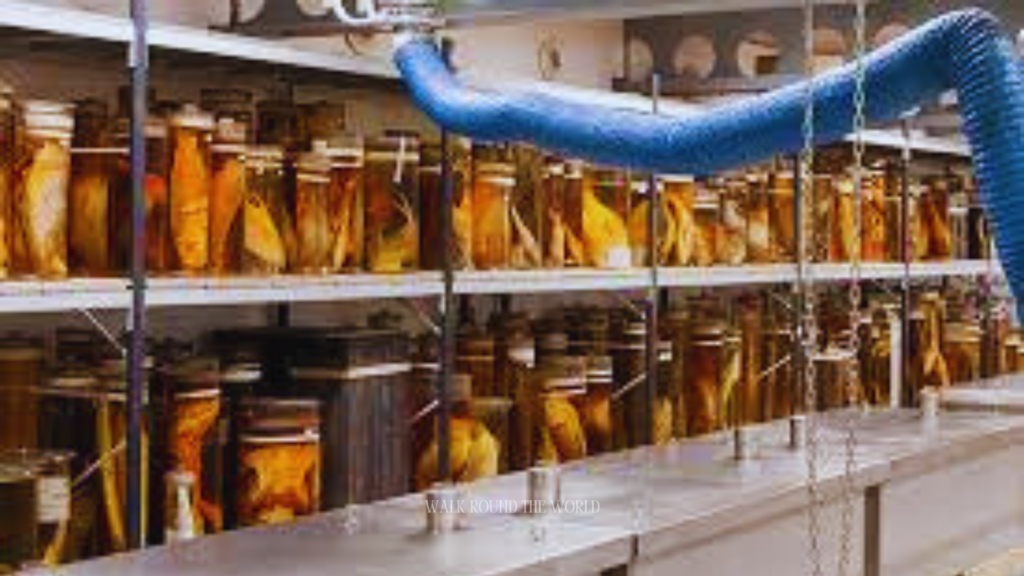
Image credit: Natural History Museum, London (https://www.nhm.ac.uk/discover)
Well, some of the oldest specimens, especially the ones from the 1800s…are said to shift positions slightly overnight, despite being sealed in fluid for over a century.
Many a time, museum staff have returned to jars to find Labels mysteriously turned around, sometimes tiny creatures facing the opposite direction on their own.
Once, one particular jar containing a fetal primate “swam” very slowly to the edge of the jar over the course of weeks…as if trying to get closer to the glass.
What do you have to say here?
It’s like the specimens are trying to scare someone or simply trying to get themselves out of there.
Anyway, let’s detour for a moment into the stranger side of science.
Weirdest Specimens & Natural Mutations in Natural History Museum London
The museum has a stunning collection of bizarre, mind-bending natural mutations that will make you question the limits of biology.
No, these aren’t mythical creatures at all. All of these weird things in Natural History Museum… are real animals and specimens affected by rare mutations, evolutionary anomalies, deformities, or bizarre adaptations that push the definition of “normal” in the natural world.
Inside the Natural History Museum Spirit Collection
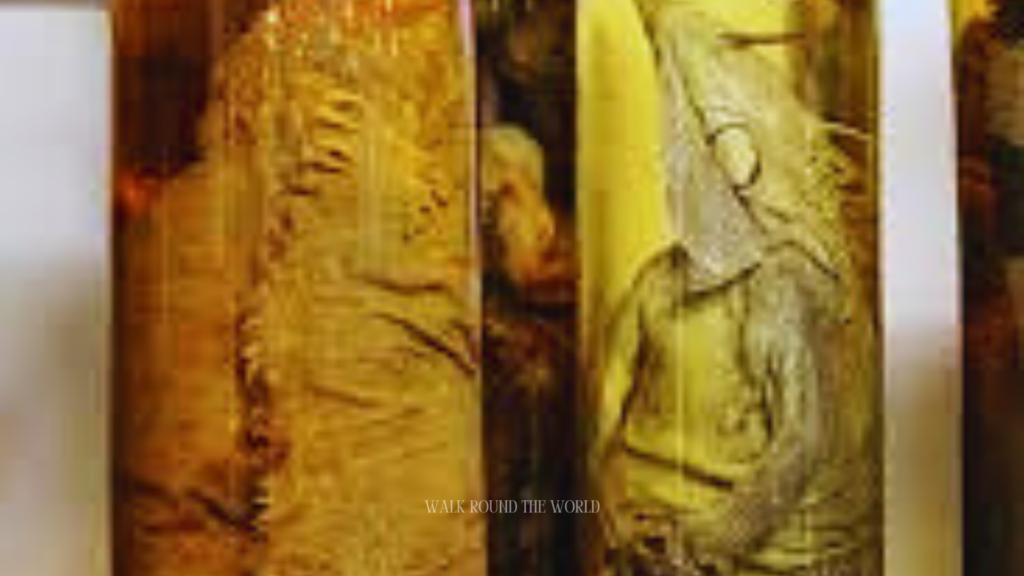
- You know, behind the scenes in Spirit collection, there’s a chick embryo preserved in ethanol with two fully-formed heads sprouting from a single neck? Though the chick never hatched, the preservation is immaculate… both heads have beaks, eyes, and brains.
- Next, there’s a Cyclops Shark Embryo. It’s not on public display ever… just studied privately. It’s said to be one of the most shocking specimens often discussed, the Cyclops shark embryo London researchers once studied. It’s a rare case of cyclopia. Such a shark fetus was found inside the womb of a pregnant dusky shark caught by fishermen. Let me tell you, Cyclopia is a lethal mutation… and it’s a one-in-a-million mutation.
- And then, in the Spirit Collection Vaults, there’s a Transparent Frog revealing every organ and bone inside its body. The fun part is that… you can literally watch its heart and see its circulatory system like nature’s X-ray. But it’s no mutation. Isn’t it fascinating?
Still, there’s more…
Rare and Bizarre Natural Mutations
Among the weird things in Natural History Museum archives, there are a two headed snake museum London specimen, six-legged piglets, albino hedgehog, the goat with human-like face, the mutant flower that grew Teeth, chick with three legs and one eye… and so many more.
These mutations aren’t just oddities… they offer vital insight into genetics, developmental biology, and evolutionary extremes. But let’s be real …some of them are fascinatingly grotesque. Looks like… it’s rightly called the “Natural mutations museum London” by many.
While many of them are tucked away in research vaults, some are even on public display.
So, you never know when you will get a glimpse of them.
Is the Natural History Museum London One of the Most Haunted Places in London?
Let me ask you a question now…based on all these events, would you say the NHM is haunted? I don’t think so…It’s more like the Natural History Museum London is living in the past, and all these rumors and stories make one wonder about the forgotten past.
But some would rank the museum among the most talked-about haunted places in London, though officially it remains a museum of science. Just like the legends surrounding Big Ben, mystery and history often intertwine in this very building.
What do the staff say?
Like every other ghost story in the world, there’s nothing here you can pin down or prove with cold, hard evidence. It’s all in the similar stories shared by the staff…with similar sort of feelings and experience.
But yes, across decades, many spooky happenings did take place.
Sometimes, at night there are footsteps behind people when they’re working late…as if something is keeping an eye on them. Then there are Exhibits that move slightly, even under climate lock and Jar lids which start “sweating” as if something alive were inside.
Aren’t these creepy? Definitely.
Can there be some coincidence? Perhaps.
But there is some museum folklore…which the guards take quite seriously.
Strange Superstitions Inside the Spirit Collection
No one knows exactly why, but there are some rules everyone must follow.
Some of these strangest of superstitions of the Natural History Museum Spirit Collection are..
- Never whistle in the Spirit Vault. It’s considered very bad luck. Enough said.
- Always greet the Komodo Dragon in the jar. Apparently, “he gets grumpy” if you don’t.
Now, I know, you will ask me….” Why all these?”
Well, I believe the people who came up with these peculiar codes have seen things most of us couldn’t handle. Those who work in the archives speak in quiet tones about odd happenings… and follow an unofficial code with absolute conviction…
- Never mock the dead.
- Never take selfies with the Spirit Collection jars.
- Always nod respectfully at the mummified animals.
Why are there such strange rules? Can’t say.
But one thing’s for sure… they weren’t written on a whim. These superstitions likely stem from years of trial, error… and a few accidents best left off the record
On several occasions, staff were seen fainted on the museum floors, they talked about strange dreams after touching some particular items, some scientists even reported auditory illusions with whispering, breathing, and all.
Some incidents were dismissed. Others quietly documented. But the stories persist.
It is believed that this museum has some allegedly cursed items, which come with their own eerie legends. And I’ll be honest…I won’t be listing those allegedly cursed artifacts here. Not because I’m scared (okay, maybe a little), but because each comes with a trail of bad luck… and frankly, I’d rather not tempt fate.
Final Thoughts: Mystery or Just Museum Folklore?
I believe the Natural History Museum London isn’t just built from Victorian stone and scientific wonder. It’s built on centuries of death, discovery, and unspoken memory. Much like the literary legends resting in Poets’ Corner at Westminster Abbey. It’s wonderful how London preserves its past in extraordinary ways.
But in the case of this museum, science hasn’t quite caught up with the strange happenings. Maybe one day, it will. Till then, you’ll just have to wait.
On that note, I’ll pause this story for now. But you must plan a visit to this museum… and if you’re exploring Central London, you might also want to step into the National Gallery in Trafalgar Square to experience a completely different side of the city’s timeless treasures. Who knows, maybe some of you can uncover the reasons behind all these unexplained occurrences at these places.
Until then, stay curious, stay brave… and if possible, don’t whistle in dark hallways while in NHM.
This is Rita, signing off.
FAQ
Can you visit the Natural History Museum at night?
Well, the Natural History Museum London closes in the early evening on most days, so regular public visits are only during daytime hours. However, the museum occasionally hosts special late-night events, themed evenings, and sleepover experiences that allow visitors to explore selected galleries after dark.
What is the Natural History Museum in London famous for?
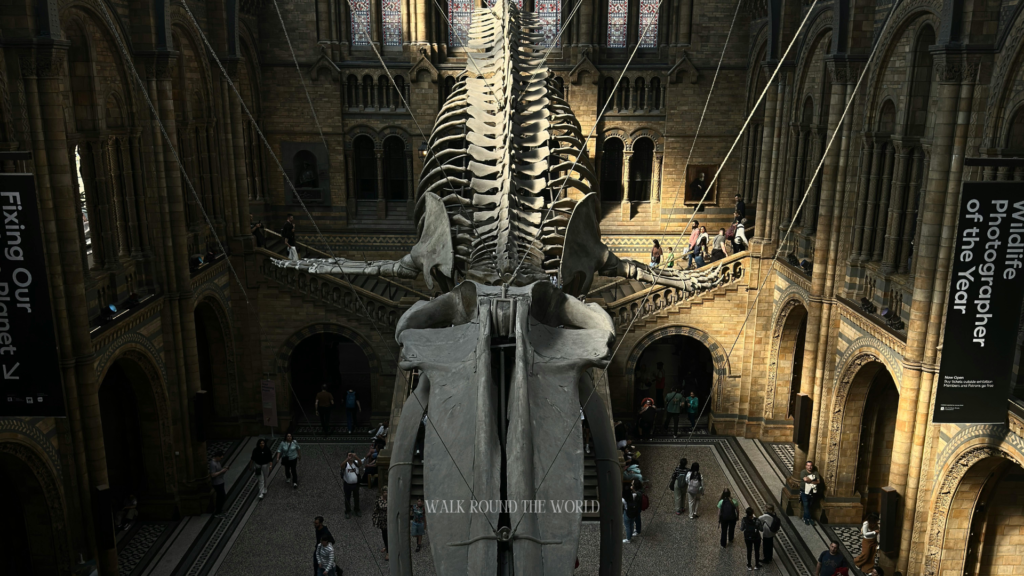
The Natural History Museum in London is famous for its dinosaur skeletons, the iconic blue whale skeleton suspended in Hintze Hall, and its vast scientific collections of over 80 million specimens. It’s also known for its Spirit Collection… which is one of the world’s largest archives of animals preserved in fluid. Beyond the exhibits, the museum is celebrated for its grand Romanesque architecture and fascinating Natural History Museum London facts that date back to 1881.
Are the dinosaur bones in the Natural History Museum London real?
Yes… many of the dinosaur fossils on display are real. Some skeletons are genuine fossilized remains, while others are scientifically accurate casts created to preserve fragile originals. The museum’s dinosaur gallery remains one of the most visited sections, drawing millions of curious minds every year.
Was the Natural History Museum in Night at the Museum?
No, the movie Night at the Museum was not filmed at the Natural History Museum of London. The film primarily features the American Museum of Natural History in New York. However, given the museum’s dramatic architecture and towering dinosaur skeletons, it’s easy to understand why many visitors imagine a similar after-hours adventure inside the Natural History Museum at night.
Does the Natural History Museum London offer night tours?
The Natural History Museum in London does not offer regular public night tours. Instead, it hosts occasional ticketed evening events and special experiences that provide limited after-hours access. These events are highly popular and must be booked in advance. But sorry to disappoint you… there are no official haunted tours.
Leave a Reply